
The Stories We Tell, The Truths We Live: A Raw Look at Addiction
Some stories are easy to tell.
Others take years.
Years of silence. Years of hiding pain behind humor, anger, isolation, achievement, or the quiet performance of being “fine.” Years of trying to outrun memories that keep resurfacing.
At the 2026 Summit on Behavioral Health in Energy Country, we are honored to welcome Lisa Kostelecky.
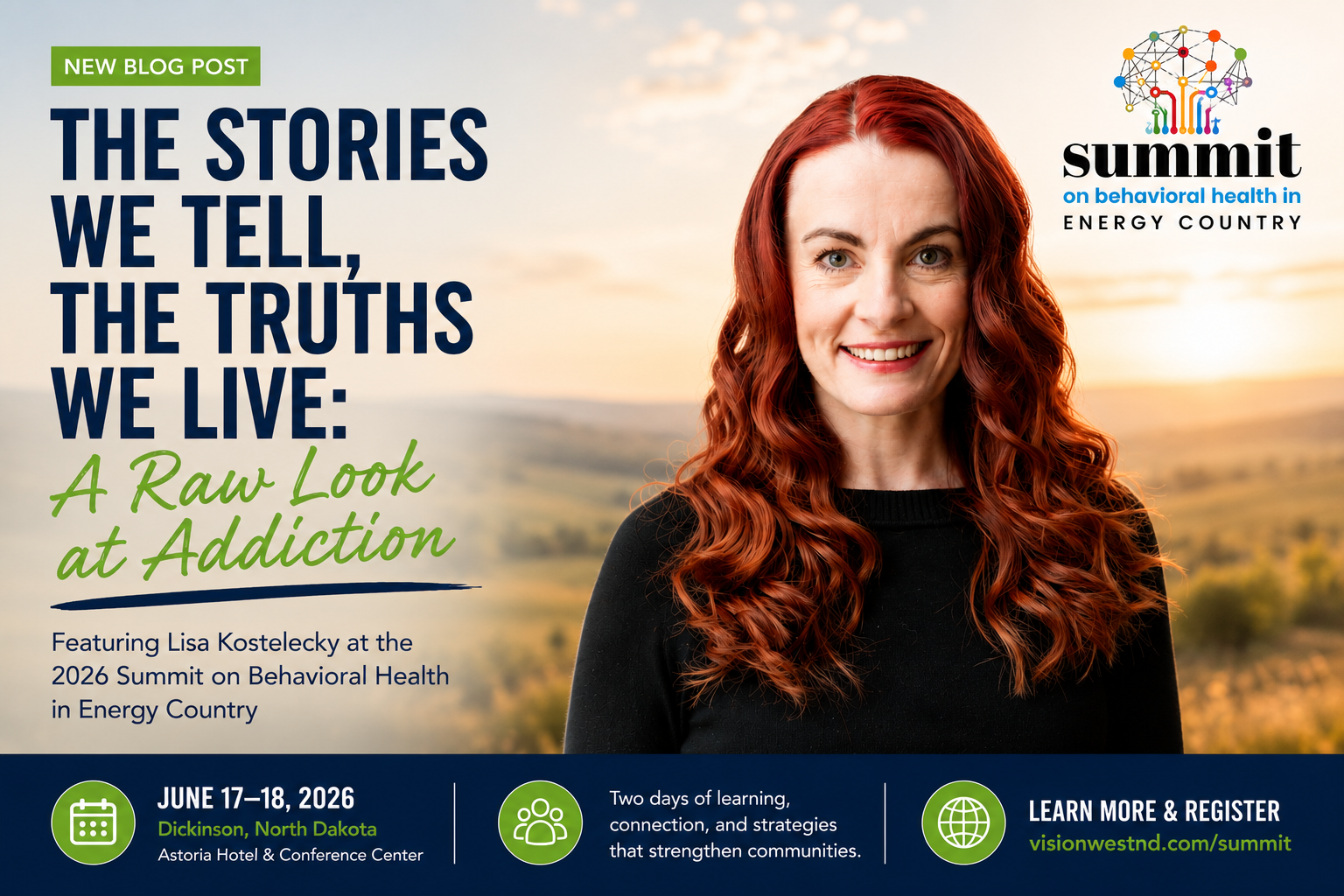
Her presentation, The Stories We Tell, The Truths We Live: A Raw Look at Addiction, speaks to something many people understand more intimately than they may ever admit aloud: addiction is rarely only about substances. It is often connected to deeper wounds that have never fully healed.
For some, the struggle begins with anxiety that never quiets down. For others, it begins with grief, trauma, depression, loneliness, or the exhausting pressure of carrying emotional pain without knowing where to place it. Substances can become a way to cope, to numb, to escape, or simply to survive another day.
Over time, survival can become a cycle.
And cycles are hard to break when shame keeps telling people they are beyond help.
Lisa speaks openly about those realities with honesty that is both direct and deeply compassionate. Her story does not present recovery as a perfect transformation or a clean linear path. Instead, she offers something more real. The understanding that healing often begins the moment someone finally stops hiding from the truth of what they are carrying.
That truth matters in behavioral health because addiction and mental health cannot be separated as neatly as systems sometimes attempt to divide them. The mind affects the body. Trauma affects behavior. Emotional pain affects decision-making, relationships, and self-worth. Treating one part while ignoring the others leaves people fighting battles they were never fully equipped to win.
Lisa’s perspective reflects the importance of seeing the whole person rather than reducing someone to their worst moment or most visible struggle.
She also reminds us that storytelling itself can become part of healing.
When people speak honestly about addiction, shame begins to lose some of its power. Silence breaks. Other people begin to recognize themselves in the story. Conversations that once felt impossible suddenly become human again.
That is part of what makes lived experience so important. Not because it provides simple answers, but because it creates connections in places where isolation exists.
Lisa’s session invites attendees to look beyond stereotypes surrounding addiction and toward a more compassionate understanding of recovery, resilience, and personal truth. Not as a destination someone reaches once and forever, but as an ongoing process of becoming more honest, more whole, and more connected to life again.
If you have ever wondered how mental health and addiction shape one another, or what recovery can look like when someone speaks openly about their journey, this is a worthwhile conversation.
Join us at the 2026 Summit on Behavioral Health in Energy Country.
Purchase your ticket, explore sponsorship opportunities, or reserve an exhibitor booth to connect your work with others committed to strengthening behavioral health across our region.
Learn more and register at https://www.visionwestnd.com/summit