

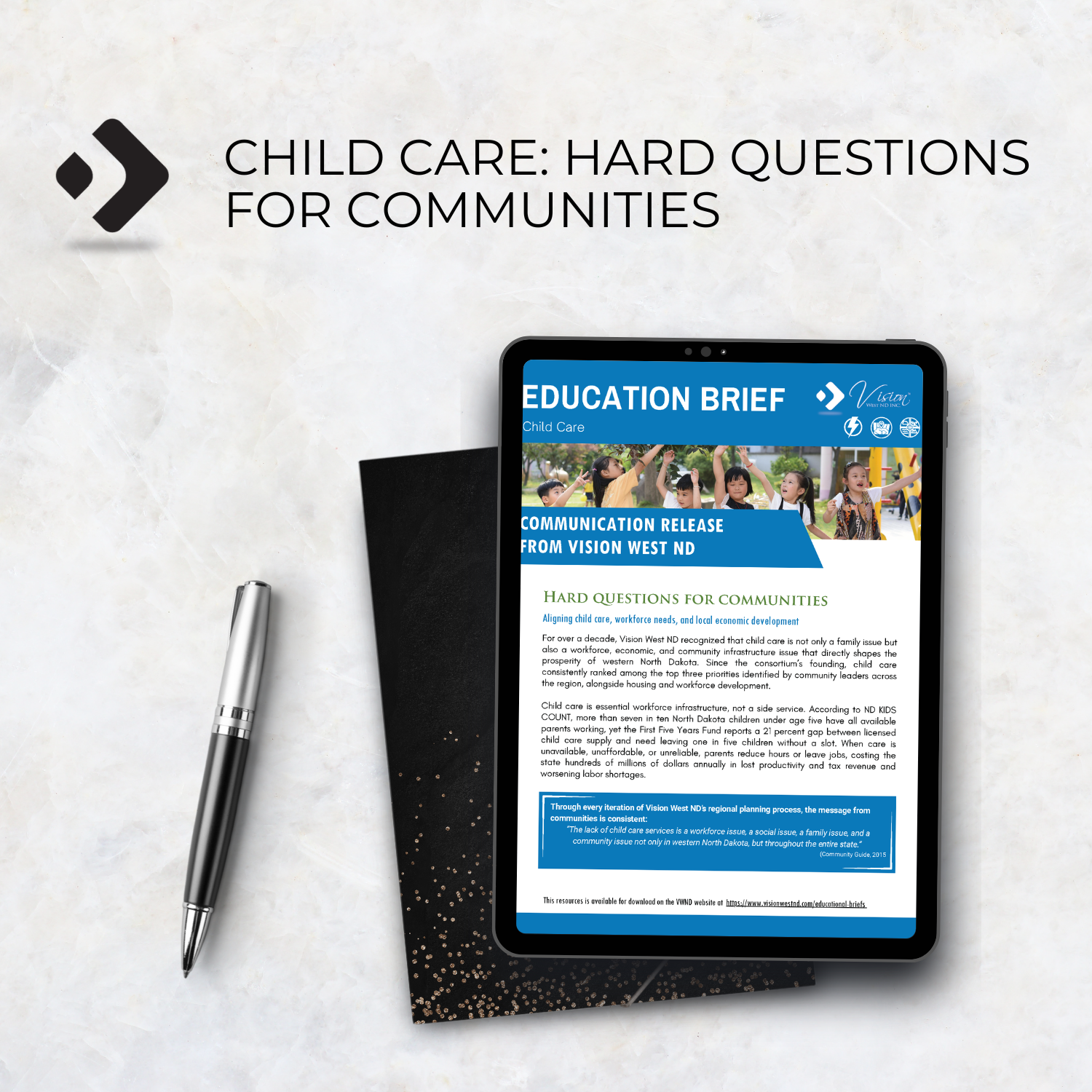
Click on the image to download your copy of the brief.
Child Care Hard Questions for Communities
This brief helps community leaders treat child care as workforce infrastructure that directly affects economic stability, recruitment, and quality of life across western North Dakota. It offers a clear set of local discussion questions and key data points to guide practical planning, including child care supply gaps, affordability pressures, reimbursement and cash flow barriers, staffing shortages, and the challenge of aligning child care capacity with where jobs and nontraditional work schedules actually are. It also elevates concrete solutions communities can explore, from employer and cooperative models to simplified access systems, shared administrative support, and long-term funding approaches that keep doors open beyond pilot projects.
Priority area alignment: Child Care and Workforce Resilience, with strong connections to Community Planning and Development.
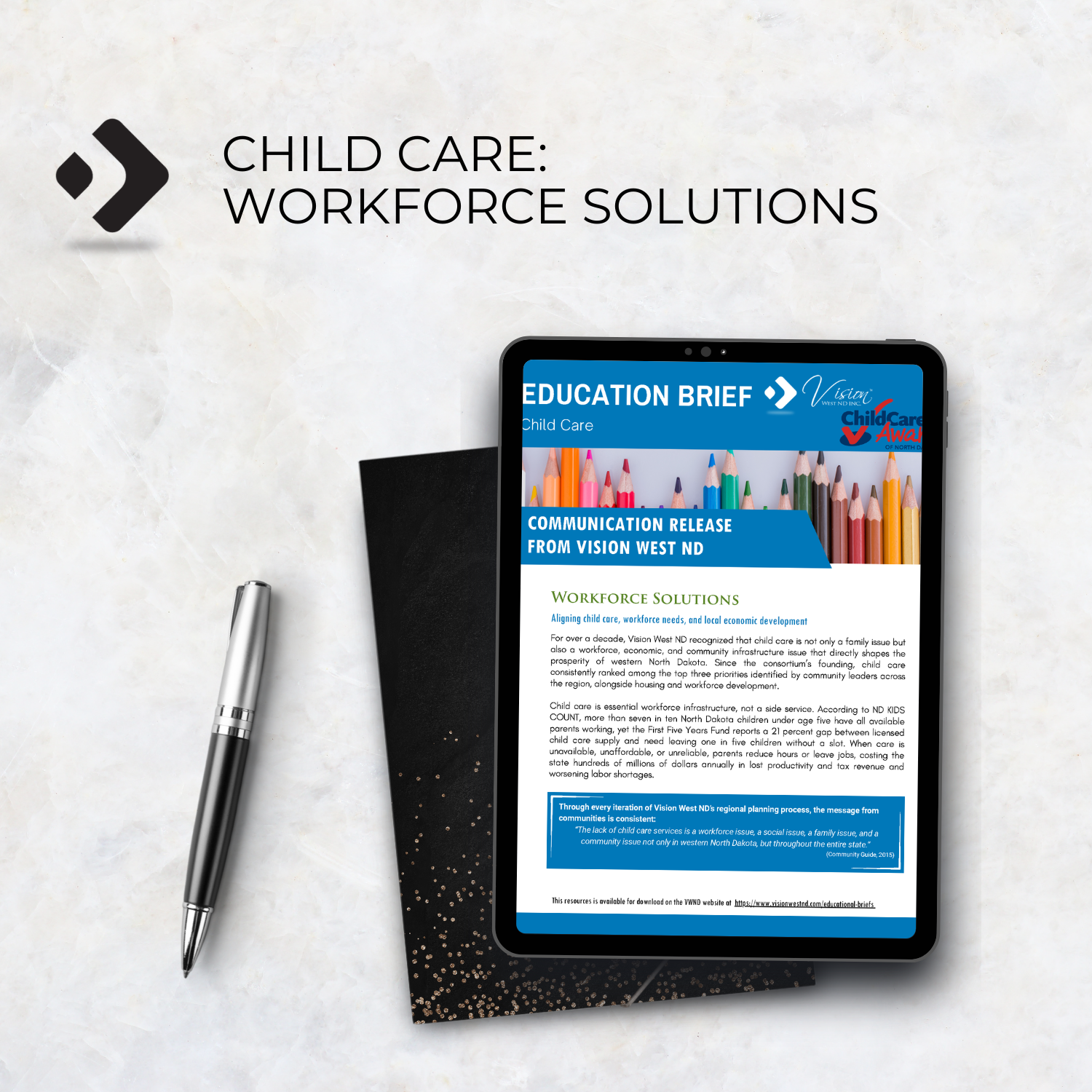
Click on the image to download your copy of the brief.
child care workforce solutions
This brief examines one of North Dakota's most pressing workforce challenges by focusing on the professionals who make every other workforce possible. It positions child care as essential workforce infrastructure and outlines practical strategies to strengthen recruitment, retention, and long-term sustainability of the early childhood workforce. The brief explores solutions such as establishing wage and career ladders, expanding education and apprenticeship pathways, investing in professional development and mental health supports, creating shared regional workforce services, stabilizing long-term funding, and elevating early educators as critical contributors to the state's economy. Throughout, it encourages communities to reflect on how local partnerships among employers, educators, workforce agencies, and policymakers can transform child care from a fragile support system into a resilient profession that strengthens families, businesses, and regional economic growth.
Priority area alignment: Child Care and Workforce Resilience, with strong connections to Community Planning and Development and Economic Diversification.

Click on image to download your copy of the brief.
CO2 Pipelines and Sequestration in North Dakota
This document offers an informative overview of CO2 pipelines and sequestration initiatives in North Dakota, focusing on community concerns and the responsibilities of governing bodies. It discusses key topics such as the acquisition of rights-of-way, relevant state laws, and regulatory obligations. Additionally, it provides context on current projects and explores the influence of counties through zoning approvals, building permits for related infrastructure, emergency planning, oversight of road usage during construction, and coordination concerning water and air quality permits.
Priority area alignment: Natural Resources Stewardship and Workforce Resilience through rural economic stability.
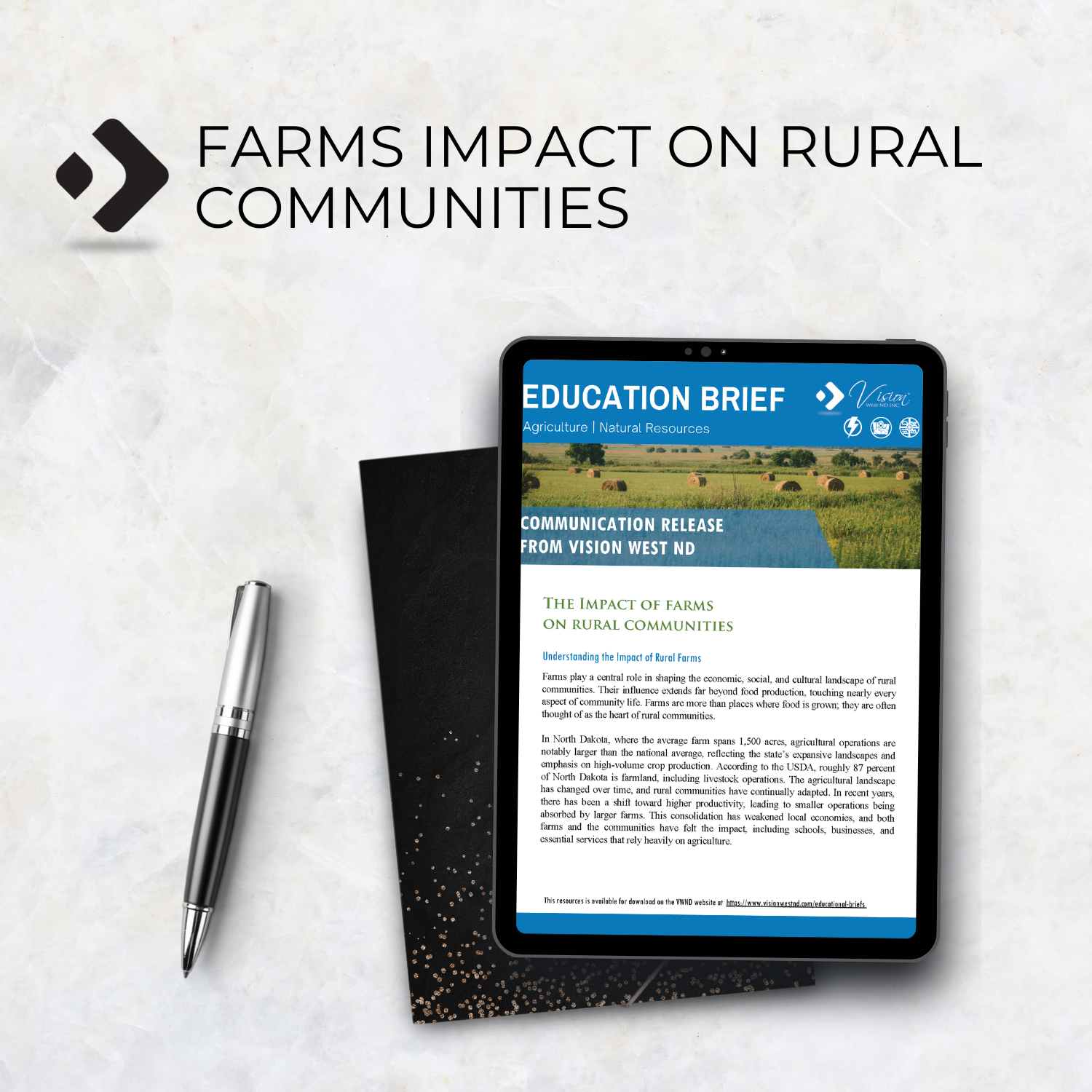
Click on the image to download your copy of the brief.
The Impact of Farms on Rural Communities
This brief gives community leaders a clear picture of how farms shape the economic, social, and cultural strength of rural communities across North Dakota. It highlights the ripple effect of farm activity through local jobs, small business stability, tax revenue that supports schools and services, and the long-term resilience that strong agricultural economies can provide during downturns. It also names the pressures rural farms are facing, including consolidation, population decline, rising land prices, high input costs, and economic volatility, and explains why these trends matter for community planning, workforce stability, and the future of rural quality of life.
Priority area alignment: Natural Resources Stewardship and Workforce Resilience, with strong connections to Community Planning and Development.

Click on image to download your copy of the brief.
Farmer’s Share: Understanding the Cost of the Food Dollar in Agriculture
This overview provides insights into the concept of the farmer's share and its significance for rural community stability. It highlights the disconnect between rising grocery prices and farm income, explaining that higher retail costs do not necessarily translate to increased earnings for farmers. Additionally, the text discusses the various expenses incurred beyond the farm gate that influence the income producers receive. Furthermore, it identifies practical strategies to enhance producer outcomes, such as developing local and regional food systems, engaging in value-added production, utilizing cooperative models, promoting supply chain transparency, and investing in infrastructure to bolster in-state value creation.
Priority area alignment: Natural Resources Stewardship and Workforce Resilience through rural economic stability.

Click on image to download your copy of the brief.
The Hidden Crisis: Mental Health Struggles in Agriculture
This brief addresses agricultural mental health as a significant concern affecting entire communities, linking it to factors such as economic volatility, environmental uncertainty, personal identity, and legacy. It points out that stigma and the societal pressure to endure challenges can deter individuals from seeking help. To combat this issue, the brief suggests practical approaches to minimize barriers by utilizing trusted community spaces and familiar individuals as sources of support. It highlights the importance of normalizing discussions about mental health, enhancing discreet access to resources, and empowering local connectors, such as clergy, veterinarians, and other respected figures, to strengthen community support systems.
Priority area alignment: Rural Health and Public Safety, with a strong connection to Natural Resources Stewardship.

Click on the image to download your copy of the brief.
Weed Seeds Travel Far and Fast
This brief explains how noxious weeds spread quickly across North Dakota through wind, water, animals, clothing, and equipment, with land disturbance creating prime entry points along roadsides, well pads, construction zones, and gravel stockpiles. It highlights why prevention is a practical leadership issue for agriculture and land stewardship, since many weeds produce massive amounts of seed, and infestations become costly once established. The brief outlines straightforward actions communities can take, including cleaning equipment and vehicles between sites, using inspected gravel sources, monitoring disturbed areas, reporting new infestations early, and using integrated management that prioritizes stopping weeds before they set seed.
Priority area alignment: Natural Resources Stewardship, with strong connections to Energy and Community Planning and Development.

Click on the image to download your copy of the brief.
Why choose weed free Gravel?
This brief explains why gravel is one of the most common pathways for spreading noxious and invasive weeds across North Dakota, especially when material is hauled long distances for roadwork, energy development, utilities, and routine maintenance. It introduces the Weed Free Gravel Program as a prevention-focused approach that reduces weed seed movement before infestations take hold, and it outlines practical steps that protect land while supporting efficient projects. The brief highlights shared responsibilities across gravel pit operators, contractors, landowners, and counties, including source management, stockpile practices, equipment hygiene, and consistent standards that reduce long-term control costs and strengthen stewardship.