
When a Child Is in Crisis, Every Response Matters
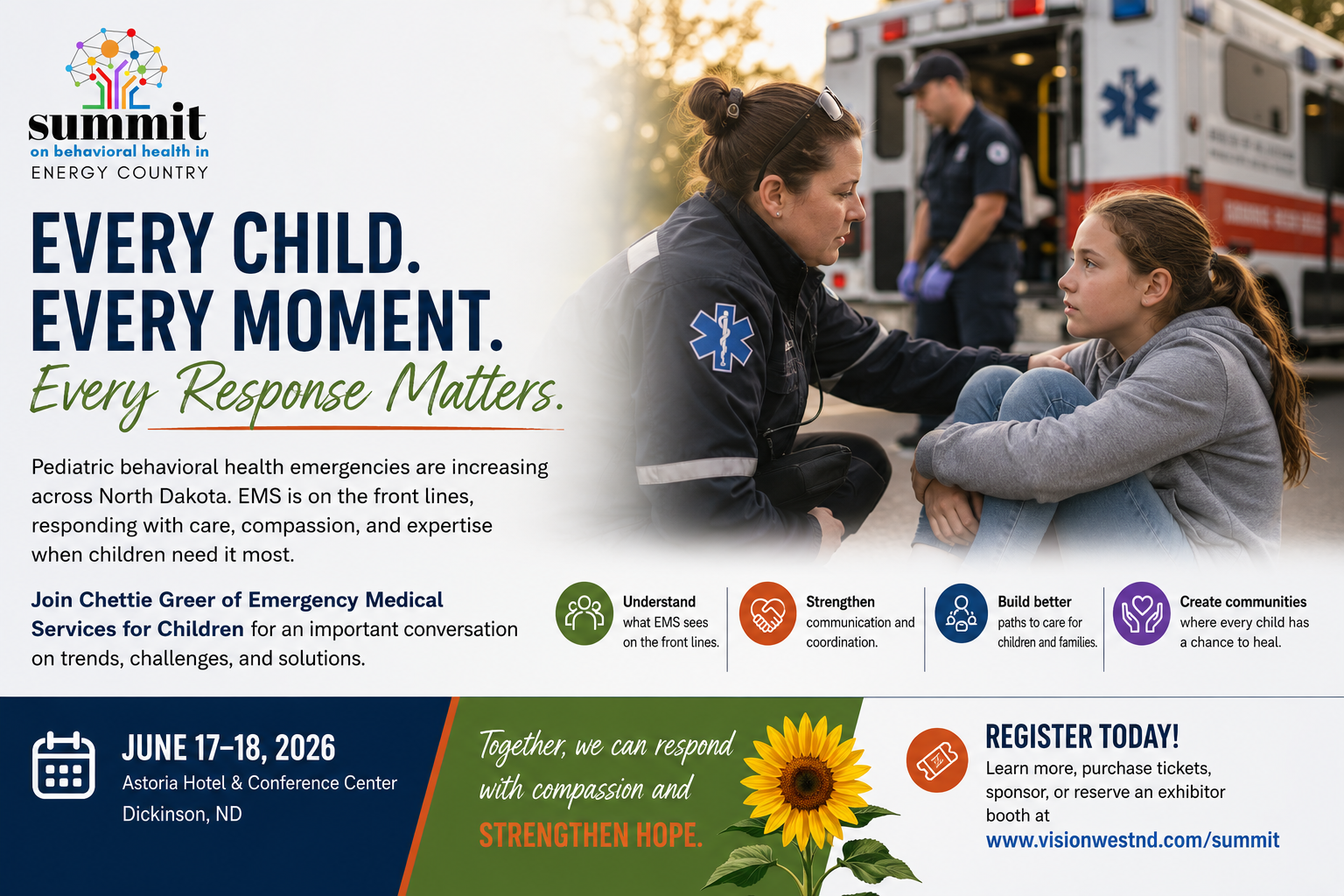
Some emergencies are readily identifiable: a broken bone, a high fever, or an obvious injury, guiding responders in their efforts. However, behavioral health emergencies in children present a different challenge. They may manifest as panic, aggression, withdrawal, self-harm, or words that no parent anticipates. While the crisis is undeniable, the path forward often remains obscured.
We are honored to welcome Chettie Greer of Emergency Medical Services for Children to the 2026 Summit on Behavioral Health in Energy Country. Chettie's work is deeply influenced by the urgent and uncertain nature of the rising tide of pediatric behavioral health emergencies facing families, first responders, and health systems across North Dakota. This issue is no longer a concern for the future; it is unfolding in real-time.
Regardless of urban or rural settings, emergency medical personnel are increasingly called upon to respond to children and adolescents grappling with severe anxiety, suicidal thoughts, emotional dysregulation, and other mental health crises. These moments can be daunting for everyone involved. Parents may feel powerless, while responders must make swift decisions amid limited information. Communities often find it challenging to coordinate care once the immediate crisis subsides.
Chettie's work shines a light on this evolving reality, helping communities grasp what frontline responders witness, how EMS systems are adapting, and where opportunities arise to enhance the continuum of care for children and families. Her presentation explains current trends in pediatric behavioral health emergencies and practical strategies to improve response, communication, and coordination.
When a child is in crisis, the objective goes beyond mere transportation; it is about stabilization, connection, and providing the best chance for healing. This conversation holds significance for more than just emergency responders, educators, healthcare providers, counselors, parents, and community leaders, all of whom play a crucial role in shaping how children experience support during their most vulnerable moments.
When systems collaborate, children are more likely to receive care that is timely, compassionate, and effective, alleviating the sense of isolation families often face. Chettie's session offers an invaluable perspective on how emergency services are evolving to tackle one of the most pressing behavioral health challenges in our communities.
If you care about the well-being of children and want to understand how communities can respond more effectively to youth in crisis, this conversation is vital.
Join us at the 2026 Summit on Behavioral Health in Energy Country.
Purchase your ticket, explore sponsorship opportunities, or reserve an exhibitor booth to connect your work with others dedicated to strengthening behavioral health across our region. Learn more and register at https://www.visionwestnd.com/summit.